
Understanding and Overcoming Dental Fear in Children
Dental anxiety affects an estimated 20–30% of children, and for many of them, it began with a single difficult experience, or sometimes with no experience at all, but with things overheard from anxious adults. It is one of the most common things I work with every single day. With the right approach, almost every child can learn to feel calm and safe in a dental chair.
What children are actually afraid of
Understanding the fear makes it easier to address. Children rarely fear the dentist in the abstract. They fear specific things:
- •Pain: Often based on something they heard from a parent, sibling, or friend, rather than anything they experienced themselves.
- •Loss of control: Being laid back in a chair with someone working inside their mouth is inherently vulnerable. Children who feel they can stop the procedure at any time are significantly less anxious.
- •The unknown: Unfamiliar sounds (the drill, the suction), smells (dental materials), and sensations are frightening when unexpected.
- •Separation: For very young children, being separated from a parent is distressing regardless of the setting.
- •Previous bad experiences: A single difficult dental appointment, especially one involving pain or restraint, can create lasting anxiety.
Before the visit: what parents can do
- •Use honest, neutral language. Do not promise 'it won't hurt at all', children sense when this is not true and lose trust. Instead: 'The dentist is going to count your teeth and make sure everything is healthy.' 'If anything feels uncomfortable, you can raise your hand and we stop.'
- •Do not overprepare. Detailed descriptions of procedures create anticipatory anxiety. Keep explanations simple and present-tense: 'We are going to the dentist today to keep your teeth strong.'
- •Read books or watch videos about dental visits. There are excellent children's books and gentle YouTube videos that normalise the experience.
- •Never use the dentist as a threat. 'If you don't brush, the dentist will pull out your teeth' is one of the most damaging things a parent can say, and I hear it referenced by anxious children regularly.
- •Model calm behaviour. If you are visibly anxious yourself, your child will pick it up. If you have dental anxiety, consider sharing it with the dentist beforehand so they can help manage both of you.
Choosing the right environment
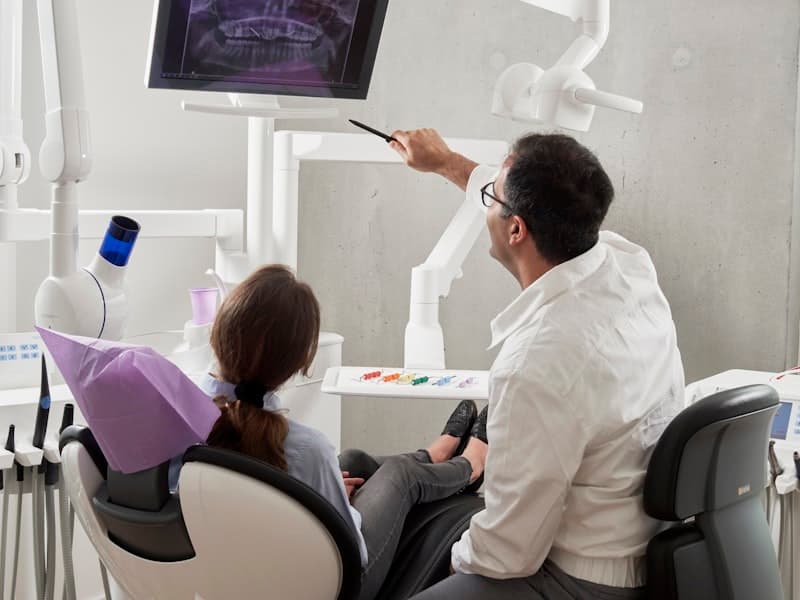
A paediatric dental specialist is trained specifically in child behaviour management. The clinic environment, designed for children, with familiar characters, appropriate colours, and no frightening equipment on display, makes a significant difference. The dentist's vocabulary, pace, and demeanour are all adapted to children. This is not just a friendly general dentist; it is a different clinical approach entirely.
The Tell-Show-Do technique
This is the gold-standard approach in paediatric dentistry, and it works. Before doing anything, I explain what I am going to do in child-friendly language ('This is a special mirror to count your teeth'). Then I show it, let the child touch it, see it, hear it if it makes a sound. Only then do I do it. Nothing is a surprise. Everything is explained and demonstrated first. Children who feel informed feel in control, and children who feel in control are not afraid.
During the visit
- •Let your child bring something from home: a toy, a stuffed animal, headphones with a favourite show.
- •Agree on a stop signal: raising a hand means everything pauses immediately. This is non-negotiable in my practice.
- •Stay present if the child wants you there. For very young children, your presence is essential.
- •Avoid coaching ('it is okay, it is fine'), children hear this as confirmation that something alarming is happening. Distraction (talk about a holiday, ask about school) works far better.
After the visit: making it stick
- •Celebrate specifically: 'You kept your mouth open so well' or 'You held really still at the tricky part' is far more powerful than generic praise like 'well done'.
- •Do not offer sugar as a reward. The irony is obvious, but it also teaches children that dental visits are ordeals that require compensation.
- •Let children describe the experience in their own words. Asking 'what was it like?' rather than 'was it scary?' allows them to process it neutrally.
- •Book the next appointment before you leave. Regular visits normalise the experience. A child who comes every six months has nothing to dread because nothing ever builds up.
When anxiety is severe
For children with significant anxiety, special needs, or complex treatment needs, conscious sedation with nitrous oxide (laughing gas) is a gentle, safe, and highly effective option. It takes the edge off anxiety without putting the child to sleep, wears off within minutes, and often transforms a previously impossible visit into a manageable one. Ask us about it if you think your child might benefit.
Dr Sheena's tip: Start young. A child who has been visiting the dentist since age one has had many positive, routine experiences before any treatment is ever needed. Prevention is the best anxiety management there is.
Questions about your child?
Ask Dr Sheena directly
WhatsApp the clinic with any question about your child's dental health.
Book an Appointment